
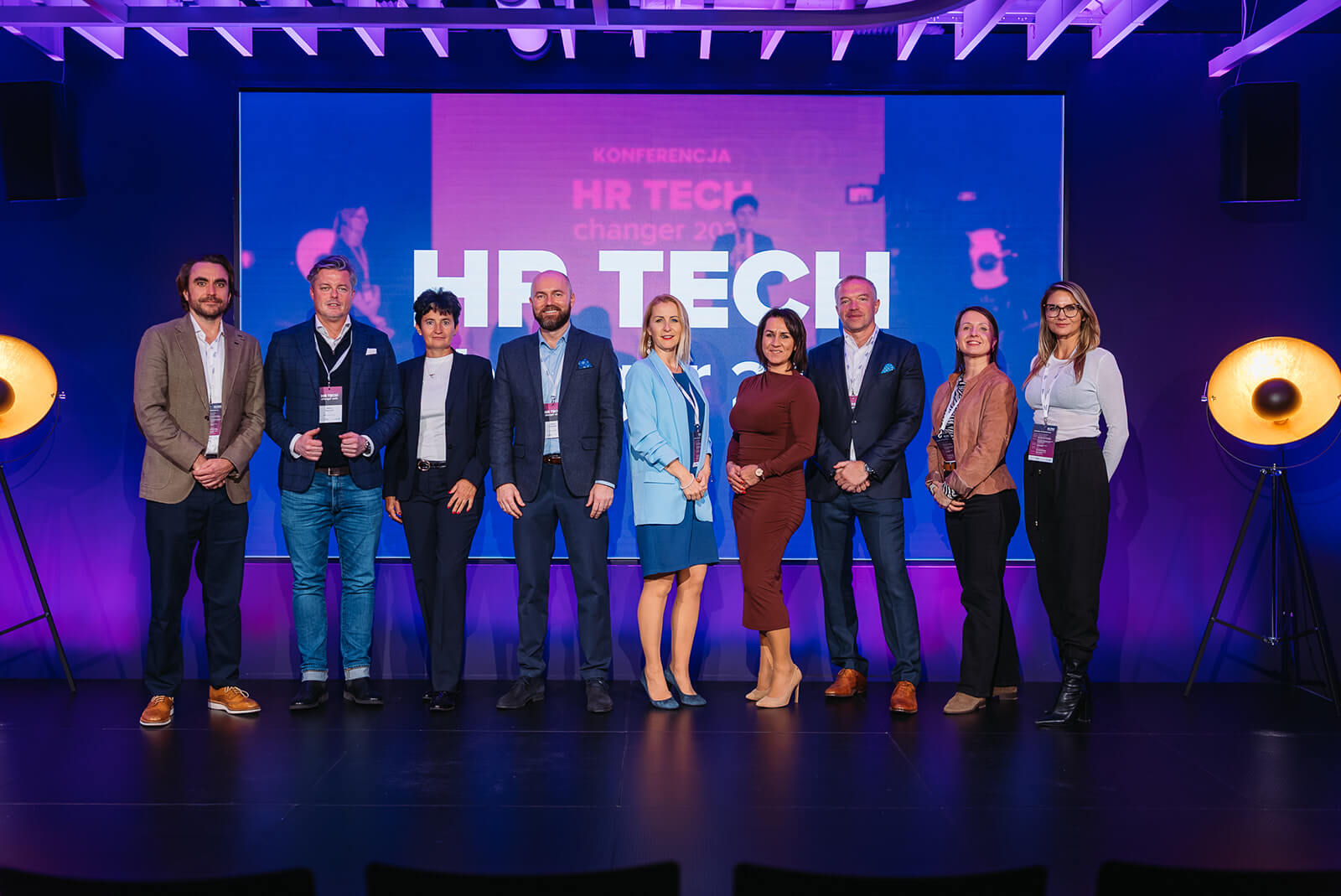
The recently concluded "Migration Forum 2026" conference brought an in-depth discussion on the future of the national labor market. Investigation of the conclusions drawn from this event shows that Poland has irreversibly undergone a transformation from an emigration country to an immigration country. However, to maintain economic stability, changing the paradigm and opening up fully to new personnel becomes crucial. The guiding theme of the expert debate was the belief that talent has no nationality - talent has only potential.
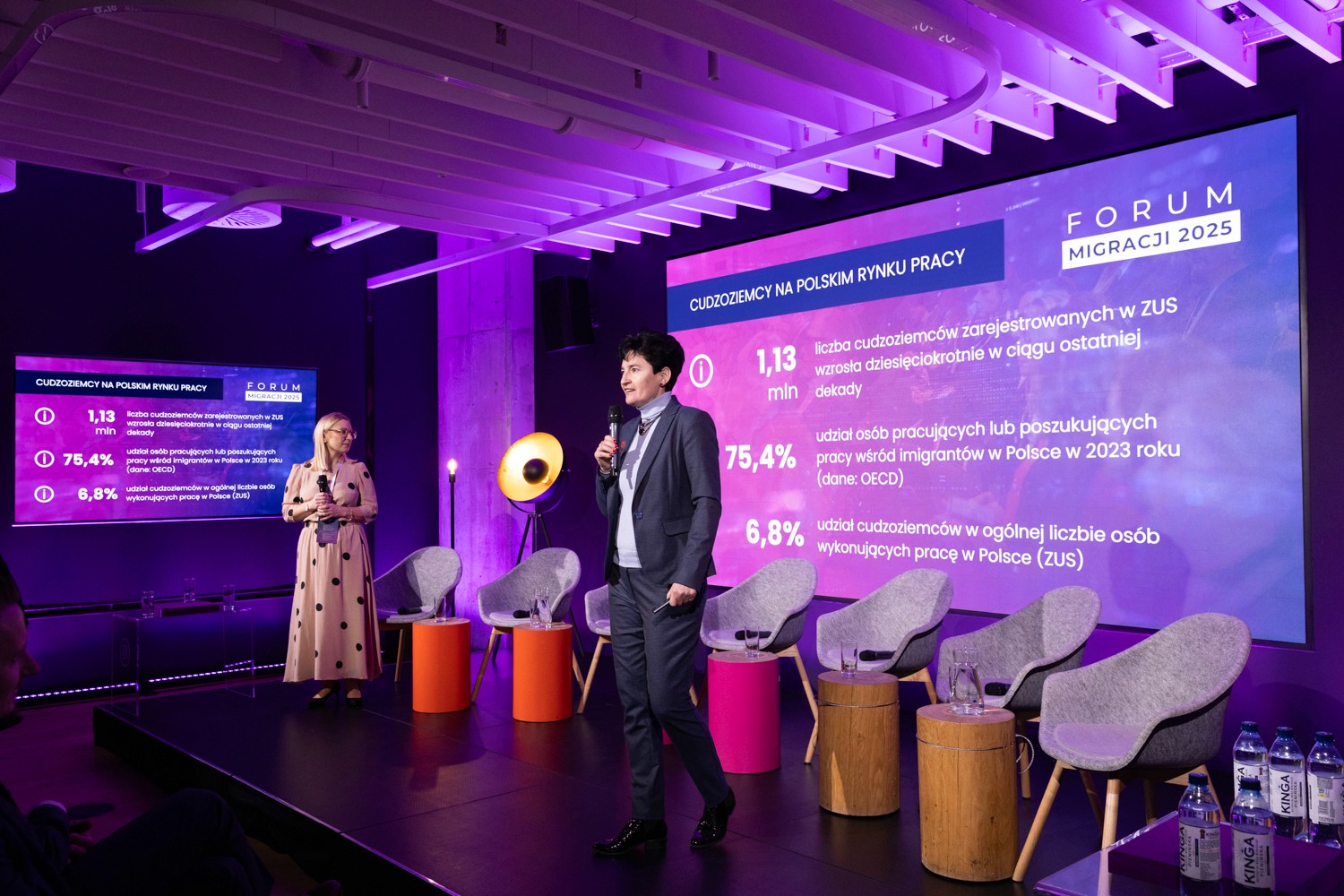
In the face of deep demographic and structural changes, foreigners already account for almost 7% of workers in our country. According to data from the Social Insurance Institution (ZUS), 1,305,011 foreigners were registered in the Polish system at the end of the first quarter of this year. These data clearly show that new residents actively build our GDP and contribute to the social security system. As Liliana Strupp, vice-president of the Polish HR Forum and initiator of the event, notes: "Talent has no nationality. It simply has concrete potential. These data finally put an end to the discussion about migration being a burden on the budget. It is exactly the opposite." Although citizens of Ukraine and Belarus still form the dominant group of the insured, new markets, including India, Colombia, and the Philippines, are becoming increasingly important.
Shifting recruitment boundaries and bureaucracy
The phenomenon of chronic labor shortage is no longer a seasonal problem but has become a structural barrier. This forces employers to look for employees on completely different continents, which creates new operational challenges. Attorney Karolina Schiffter, a partner at the Fragomen law firm, points out the emergence of new leaders in labor migration, such as countries in Latin America or Africa, with a simultaneous retreat from traditional Asian directions caused by regulatory barriers.
"The main obstacle to building stable teams based on foreigners from distant markets remains the Polish bureaucracy and the immigration system, which is currently characterized by huge unpredictability. The average time needed to bring an employee to Poland ranges from three to even seven months, which puts us in a much worse competitive position compared to our neighbors, such as Germany, where this process is twice as fast," explains Atty. Karolina Schiffter. The expert also adds that recruitment from the other side of the world has stopped being a simple HR task and has become a complicated strategic project, which often ends in failure due to a maze of formalities and legal traps on the part of sending countries.
However, these bottlenecks and rigorous procedures overlap with the administrative perspective focused on system security. Dr. Ewa Flaszyńska, Director of the Labor Market Department at the Ministry of Family, Labor and Social Policy (MRPiPS), defends the introduced restrictions and points out the necessity of reliable verification: "The overriding goal of the changes was to seal the borders and organize the rules of entry into the Schengen area. The ministry notes with satisfaction sharp drops in the number of issued documents admitting foreigners to the Polish labor market, seeing this as proof of successful elimination of entities that previously abused the system."
All this is additionally superimposed on clashes with protectionist systems in the sending countries. Using the example of the Philippines, Warsaw University doctoral candidate Olga Wanicka points out critical visa bottlenecks: "The most serious systemic limitation at present is the inefficiency of the Polish visa system. Slots at the embassy in Manila are dramatically scarce, which causes work authorization documents to expire before the migrant even reaches the consul."
MOS 2.0: Digitization stuck halfway
The results of the implementation of the MOS 2.0 system have also been evaluated. Although the goal was to tighten the procedures, the operational reality has brought interpretive chaos and months of backlogs. Łukasz Dudzik of Randstad Polska warns that in Warsaw alone, issuing a permit can take up to 200 days. "An employer needs an employee here and now, not in 200 days. If we add visa formalities to the prolonged procedure, the foreigner often reaches Poland a year or a year and a half after the recruitment - at a time when the demand for their work has long expired," explains Łukasz Dudzik, pointing out that official delays drive the market to seek informal solutions. This diagnosis is shared by Marcin Grzesiak of Deloitte, confirming that despite digitalization, the processing time for applications is increasing and the system was only partially implemented. Rafaela Wahl of Otto Work Force points to a troublesome bureaucratic dualism: "Today we are working on two fronts: processing paper applications while simultaneously having to implement electronic processes. The MOS 2.0 system solves the problem only partially."
Another barrier is the lack of consistency in the operation of public administration. Attorney Joanna Torbé-Jacko from the Law Firm Joanna Torbé-Jacko & Partners emphasizes that honest entrepreneurs primarily expect clear and repeatable rules of the game. "Employers are ready for things to be more difficult, but on the condition that they are faster. Currently, entrepreneurs still face inconsistent interpretations. Each office applies its own interpretation of the rules and requires a different set of attachments," points out Atty. Joanna Torbé-Jacko, also criticizing the systemic limitation of the role of professional representatives in submitting online applications.
National integration strategy
In response to social challenges, the government administration is preparing a framework for a long-term integration policy. Bartłomiej Potocki, Director of the Social Integration Department at MRPiPS, announces the imminent adoption of a complementary document developed through extensive pre-consultations. "The implementation schedule obligated us to create a document complementary to the migration strategy. This is a very compromise-based proposal, developed in the course of broad pre-consultations with over 120 entities. Our goal is to adopt the document by the middle of this year. We are not looking for a revolution, but a solid framework for actions that are already underway," explains Bartłomiej Potocki.
Experts consistently stressed that this cannot be perceived solely as a set of obligations imposed on newcomers, but as a deeply mutual process involving the entire host society. As noted by Myroslava Keryk, President of the Ukrainian House Foundation, Poland became a multicultural society practically overnight, especially in the face of Russia's full-scale aggression against Ukraine, for which not all citizens were prepared.
Janina Owczarek, coordinator of the Labor Migration and Social Integration Program, IOM, spoke in a similar tone, emphasizing that effective integration is impossible without understanding the attitudes of Poles themselves. She noted that the state still possesses negligible knowledge about the needs and fears of local communities in the context of increasing diversity. "Without exploring these needs, integration efforts may fall into a vacuum," warned Owczarek.
Experts warn that the official machine can be ruthless, and bureaucratic chaos directly hits migrants. Dr. Kamil Matuszczyk, assistant professor at the Faculty of Political Science and International Studies of the University of Warsaw, points to the so-called irregularity trap: "In Poland, it is extremely easy to lose legal residence status due to an official's error, a dishonest intermediary, or prolonged proceedings. There is a lack of safe 'getting back on track' mechanisms - currently, a foreigner looking for help to legalize their stay risks immediate deportation." Furthermore, dr Kamil Matuszczyk points to chronic staff shortages in the administration, where hundreds of officials are missing, making efficient and reliable service impossible.
Migration narratives and the fight against disinformation
Unfortunately, the public debate on migration is increasingly infected by deliberate disinformation. Dr. Aleksandra Michałowska-Kubś, senior content verification analyst at NASK, emphasizes that manipulative messages operate with strong socio-economic emotions, appealing to fears about identity or personal safety. The lack of a precise government information policy only deepens this problem. Dr. Olena Babakova, journalist and lecturer at Vistula University, points to glaring analytical deficiencies of the state: "Poland still lacks coherent data regarding migration. We juggle numbers that differ from each other by hundreds of thousands of people. This creates space for manipulation." The consequence of this chaos is growing stigmatization, which further paralyzes the constructive implementation of systemic solutions.
The conclusions contained in the summary of the conference leave no illusions. The future of the Polish labor market depends on whether the state can efficiently manage legal migration, keeping in mind that competencies have no boundaries. The slogan that talent has no nationality, but only potential, must stop being merely a conference catchphrase, and become the foundation of a predictable and coherent state policy which, instead of punishing legality, will promote it through speed of action.







" transform="translate(2.833 8.5)" width="28.33333px"/><path d="M 0.022 14.132 C 0.115 18.475 0.161 20.646 1.764 22.255 C 3.366 23.863 5.596 23.919 10.057 24.031 C 12.806 24.101 15.528 24.101 18.277 24.031 C 22.737 23.919 24.967 23.863 26.57 22.255 C 28.172 20.646 28.218 18.475 28.311 14.132 C 28.341 12.736 28.341 11.348 28.311 9.951 C 28.218 5.608 28.172 3.437 26.57 1.828 C 24.967 0.22 22.737 0.164 18.277 0.052 C 15.528 -0.017 12.806 -0.017 10.057 0.052 C 5.596 0.164 3.366 0.22 1.764 1.828 C 0.161 3.437 0.115 5.608 0.022 9.951 C -0.007 11.348 -0.007 12.736 0.022 14.132 Z" fill="transparent" height="24.083362500271463px" id="S0q8vHdPK" stroke-dasharray="" stroke-linecap="butt" stroke-linejoin="round" stroke-width="2.5" stroke="rgb(255, 255, 255)" transform="translate(2.833 4.961)" width="28.333351251416875px"/></svg>)
" height="30.459721732365058px" id="NLdB3v0Tr" transform="translate(1.77 1.773)" width="30.459299043458806px"/></svg>)
" transform="translate(12.092 9.211)" width="9.916699999999999px"/><path d="M 11.333 0 C 5.074 0 0 5.125 0 11.448 C 0 15.063 1.417 17.874 4.25 20.384 C 6.247 22.154 9.881 25.95 11.333 28.333 C 12.859 25.998 16.42 22.154 18.417 20.384 C 21.25 17.874 22.667 15.063 22.667 11.448 C 22.667 5.125 17.593 0 11.333 0 Z" fill="transparent" height="28.33316px" id="IqmW6KOOc" stroke-dasharray="" stroke-linecap="butt" stroke-linejoin="round" stroke-width="2.5" stroke="rgb(255, 255, 255)" transform="translate(5.667 2.836)" width="22.666670000000003px"/></svg>)